Last Updated: June 26, 2026
For most Americans, if a doctor at a government hospital causes serious harm through negligence, the path to justice is clear: file a lawsuit under the Federal Tort Claims Act (FTCA), 28 U.S.C. §§ 1346(b), 2671–2680. That law waives the federal government's sovereign immunity and allows individuals to hold government employees accountable for negligent acts — the rules for suing the federal government for negligence are the same for a veteran, a military family member, or any other civilian.
But for military servicemembers and veterans, there is a complicating legal doctrine that has shaped — and in many cases blocked — the ability to sue for military medical malpractice. It is called the Feres doctrine, and understanding it is essential for anyone harmed by negligence at a VA hospital, a military treatment facility, or another federal medical provider.
The most important thing to understand upfront: the Feres doctrine does NOT bar veterans from suing the VA. This distinction between active-duty servicemembers and veterans is the single most consequential legal line in military medical malpractice law.
Were you or a veteran you love harmed by VA negligence?
The Feres doctrine doesn't apply to veterans. Our doctor-attorney team has recovered $145M+ for VA malpractice clients — including cases clients thought were unwinnable. Free case review.
Get a Free Case Review →No Fee If No Recovery · Doctor-Attorney on Staff
What Is the Feres Doctrine?
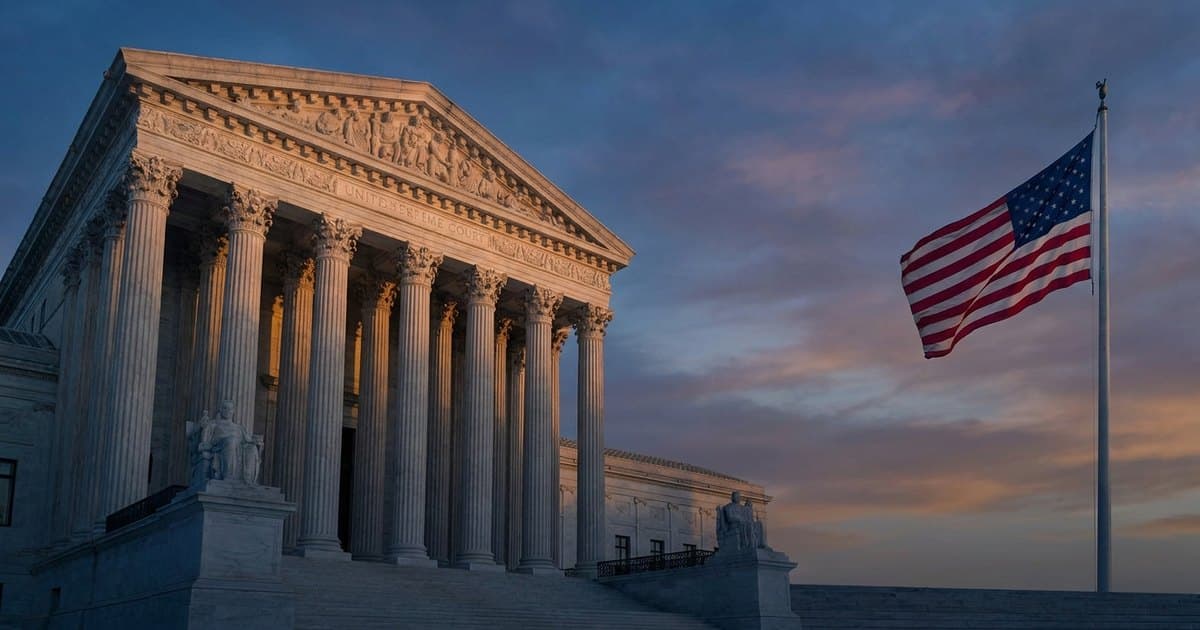
The Feres doctrine traces to a 1950 Supreme Court decision: Feres v. United States, 340 U.S. 135 (1950). The case arose from three separate lawsuits filed by or on behalf of active-duty servicemembers who were injured or killed due to alleged negligence of Army personnel. The Supreme Court consolidated the cases and held that the FTCA does not permit active-duty servicemembers to sue the United States for injuries that "arise out of or are in the course of activity incident to service."
This ruling was not based on explicit statutory language. Congress did not write an active-duty exception into the FTCA. Rather, the Court inferred from the structure of the military compensation system — including veterans' benefits, the Uniform Code of Military Justice, and the nature of military service — that Congress did not intend to allow servicemembers to sue their commanding government in federal tort court.
The specific phrase the courts have applied ever since is the "incident to service" test: if an active-duty servicemember's injury arose from an activity or relationship incident to military service, the FTCA claim is barred.
The Three Justifications Courts Have Used
Over the decades, federal courts have identified three main rationales for the Feres doctrine:
-
The distinctly federal relationship: The relationship between the government and its active-duty soldiers is fundamentally different from any private employer-employee relationship. The military requires a unique degree of discipline, command authority, and unit cohesion that civilian tort law could disrupt.
-
The military compensation system: Congress created a separate and comprehensive benefits system for servicemembers — including disability pay, medical care, and survivors' benefits. Courts have reasoned that servicemembers are not without remedy; their remedy is through that system, not FTCA tort suits.
-
Judicial interference in military decisions: Allowing courts to second-guess decisions made in the course of military operations — including medical decisions at military hospitals — could impair military effectiveness and discipline.
Critics of Feres — including several Supreme Court Justices — have argued these rationales are circular, judicially invented, and unjust. Justice Clarence Thomas has written that Feres "cannot be justified" under the text of the FTCA and should be overruled. But it remains the law today for active-duty cases in federal court.
The Critical Distinction: Active-Duty vs. Veteran
Here is the legal line that changes everything: a discharged veteran is not "on active duty."
When a servicemember leaves military service — whether through honorable discharge, medical discharge, retirement, or any other form of separation — they become a civilian. When that veteran then seeks care at a VA hospital or VA-contracted facility, they are a civilian patient receiving care from the federal government's Department of Veterans Affairs. They are not a soldier receiving medical care as part of their military duties.
Federal courts have consistently held that the Feres doctrine does not bar FTCA claims by veterans. The "incident to service" test simply does not apply to post-service VA medical care. A veteran who suffers harm due to negligent surgery at a VA hospital can file an FTCA claim under 28 U.S.C. § 1346(b) — the same statute available to any civilian suing a federal employee for negligence.
This distinction is not a technicality. It is a substantial legal right. The FTCA framework for veterans is robust: veterans can recover damages for medical expenses, lost wages, pain and suffering, and other losses caused by VA negligence.
Who Can Sue Under the FTCA
Understanding who falls inside and outside the Feres bar is essential:
Veterans: Full FTCA Rights
Any servicemember who has been discharged, separated, or retired from active military service can bring an FTCA medical malpractice claim for negligent care received at a VA medical center or clinic after their separation. The Feres doctrine does not apply to their claims. They must comply with all standard FTCA procedural requirements — filing a Standard Form 95 within 2 years, exhausting administrative remedies — but they are not barred by Feres.
Family Members of Veterans: Full FTCA Rights
Family members of veterans who died or suffered serious harm due to VA negligence have independent rights to sue. A spouse, child, or parent can bring wrongful death claims, loss of consortium claims, or survival action claims under the FTCA and the applicable state law where the negligence occurred. The wrongful death FTCA process follows the same administrative exhaustion requirement as other FTCA claims. Feres does not bar these family claims.
Active-Duty Servicemembers: Generally Barred, with a New Exception
Active-duty servicemembers who suffer injuries during military medical treatment at a military treatment facility (MTF) are generally barred from filing FTCA suits in federal court under Feres. There is, however, a meaningful partial exception created by the 2020 National Defense Authorization Act — discussed in detail below.
National Guard and Reserve Members: Status Matters
The situation for National Guard and Reserve members is more complex and depends heavily on what duty status they were in at the time of injury. Guard and Reserve members who are injured while serving on federal orders may be treated as active-duty for Feres purposes. Guard members in a state-only activation may have state tort claims available instead. This is an area where legal guidance is particularly important, because the wrong assumption about status can doom a claim.
The 2020 NDAA Partial Fix: 10 U.S.C. § 2733a
The most significant change to active-duty malpractice law in generations came in the National Defense Authorization Act for Fiscal Year 2020. Congress added 10 U.S.C. § 2733a, creating a new administrative claims process that allows active-duty servicemembers to seek compensation for medical malpractice at military treatment facilities.
What § 2733a Does
- Active-duty servicemembers can file an administrative claim with the Department of Defense for medical malpractice at an MTF
- The DoD pays substantiated claims of $100,000 or less directly; for meritorious claims worth more than $100,000, it pays the first $100,000 and refers the excess to the U.S. Treasury for payment — so recovery is not hard-capped at $100,000
- The DoD can award compensation without the servicemember needing to file a lawsuit
- An independent medical reviewer evaluates whether the care fell below the standard of care
What § 2733a Does NOT Do
- It does not allow active-duty servicemembers to sue in federal court — Feres still blocks that avenue
- It does not give servicemembers a day in court on damages — claims are valued administratively under DoD regulations (32 C.F.R. Part 45), not by a federal judge or jury
- It does not give servicemembers the right to appeal an adverse decision to a federal judge
- It does not cover non-medical injuries incident to service, which Feres still bars
- It does not apply to injuries that occurred before the statute's effective date
The 2020 NDAA was a step forward, but it is not the comprehensive reform that many military malpractice advocates have sought. Veterans and their families filing FTCA claims against the VA are in a significantly stronger legal position than active-duty servicemembers pursuing relief under § 2733a. For more on the ongoing push to eliminate or further narrow the Feres doctrine, see our guide to Feres doctrine reform in 2025.
What Limits VA Malpractice Claims for Veterans?
If Feres does not apply to veterans, what does constrain their ability to sue the VA? The real limitations are the standard FTCA procedural requirements:
The 2-Year Statute of Limitations
Under 28 U.S.C. § 2401(b), you must file your administrative claim with the VA within 2 years of when your claim accrues — generally, 2 years from when you knew or reasonably should have known that VA negligence caused your injury. This deadline is strictly enforced, though the Supreme Court held in United States v. Kwai Fun Wong, 575 U.S. 402 (2015), that the FTCA's § 2401(b) time limits are not jurisdictional and can be equitably tolled in narrow circumstances. For a full analysis of how this deadline is calculated and when it may be tolled, see our FTCA statute of limitations guide.
Administrative Exhaustion
You cannot file a lawsuit directly in federal court. You must first present your claim using Standard Form 95 (SF-95) to the VA's Office of General Counsel. The VA has 6 months to accept, deny, or settle the claim. Only after a denial — or 6 months of inaction — can you file suit. Our step-by-step SF-95 guide explains the filing requirements in detail.
The Sum Certain Requirement
Your SF-95 must state a specific dollar amount representing your damages ("sum certain"). Failure to include a sum certain means your administrative claim is invalid, which can be fatal to your case.
Attorney Fee Caps
Under 28 U.S.C. § 2678, attorney fees in FTCA cases are capped at 25% of a court judgment or 20% of an administrative settlement. This is designed to protect claimants, but it also shapes how FTCA cases are litigated. The Archuleta Law Firm handles all FTCA cases on a contingency basis within these statutory limits.
Why This Matters: The Numbers Tell the Story
Veterans who attempt to navigate the FTCA process without experienced legal counsel face steep odds. The Archuleta Law Firm's data across more than 600 FTCA cases shows that represented veterans receive an average settlement of $241,641, compared to $63,219 for veterans who represent themselves (pro se). The difference is not just legal expertise — it is medical expertise, the ability to retain qualified expert witnesses, and deep familiarity with the VA's administrative and litigation practices.
The firm has recovered more than $145 million for veterans and their families in VA and military medical malpractice claims. View case results →
How to Pursue an FTCA Claim
If you are a veteran who was harmed by VA negligence — or a family member of a veteran who died due to VA care — the process begins with a confidential case evaluation. An experienced FTCA attorney can:
- Evaluate whether VA negligence caused your injury
- Determine the correct statute of limitations deadline for your specific situation
- Gather your VA medical records and have them reviewed by a qualified medical expert
- Prepare and file a properly documented SF-95 with the correct sum certain
- Handle all communication with the VA during the administrative phase
- If necessary, file suit in federal district court and litigate your case through trial
The FTCA process is demanding, but for veterans harmed by VA negligence, it is a powerful avenue for justice.
Related Articles
- Does the Feres Doctrine Apply to Veterans? →
- Feres Doctrine Reform in 2025–2026 →
- Active-Duty Military Malpractice and the 2020 NDAA →
- National Guard and Reserve Malpractice →
- FTCA Statute of Limitations →
- Standard Form 95 Guide →
The information provided on this website does not, and is not intended to, constitute legal advice. All information, content, and materials available on this site are for general informational purposes only. Readers should contact their attorney to obtain advice concerning any particular legal matter.
EJ Archuleta, J.D., is a federal practice attorney with over 13 years of experience handling FTCA medical malpractice claims against the VA and military treatment facilities. He is licensed to practice law in the State of Texas, is a member of the State Bar of Texas, and is admitted to the United States District Court for the Western District of Texas. He has helped hundreds of military servicemembers, veterans, and their families receive compensation for injuries and wrongful death caused by the Department of Veterans Affairs.
Don't assume Feres bars your claim — it probably doesn't
If you're a veteran or family member of a veteran harmed by VA care, you have real legal rights under the FTCA. Our doctor-attorney team will review your case for free. $145M+ recovered.
Get a Free Case Review →No Fee If No Recovery · Doctor-Attorney on Staff